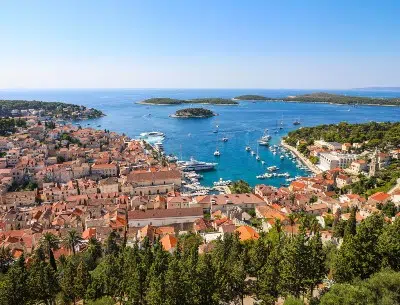
One could easily spend their entire Croatia vacation in Istria with everything from a magnificent coastline with beautiful beaches edging turquoise water to lush hills topped by medieval walled towns. There are many destinations that make for an ideal base, from the seaside city of Pula, the largest on the peninsula, to romantic Rovinj and the tiny town of Motovun. No matter where you are you can expect picturesque views and mouthwatering cuisine. Istria is renowned for its truffles, with many dishes like truffle pasta and truffle risotto, as well as offering lots of fresh-caught fish and seafood. There are plenty of outstanding regional wines to pair with it too. In this guide to Istria, you’ll find all you need for the ultimate escape.

Opening Times - Mon to Fri: 9am to 5pm
A Guide to Istria
Where is Istria?
Istria is situated in the northeastern part of the Adriatic Sea with nearly 90 percent in Croatia, although the peninsula is also shared with Slovenia and Italy. It’s the largest peninsula bordering the Adriatic, tucked between the Kvarner Gulf and the Gulf of Trieste. There are also a number of island groups off its west coast, including the Brijuni Islands and islands in Kvarner Bay, among others. Characterized by its diverse landscapes with rugged mountains, dense forests, lush hills, fertile plains, and rocky beaches. In the northeast, the Dinaric Alps rise as high as nearly 4,600 feet at Mount Ucka. The region is also known for its olive groves and vineyards that produce high-quality olive oil and wine.
How Much Time to Spend in Istria?
One could easily spend months exploring the many delights of Istria, including its hidden treasures, but those who don’t have the luxury of a lot of time will find that a lot can be explored in a full week. It’s a relatively small region which makes it easy to explore the top cities and some of the most enticing towns in five days, leaving two days to spend time at the beaches, take a wine-tasting tour, or embark on a scenic hike. If you can’t spend an entire week, you can get a good taste of the region within a few days, choosing one destination as your base, exploring the general area, and perhaps taking a couple of tours.
How to Get Around Istria?
The best way to get around Istria is by car. Renting a car will give you the freedom to explore everything from the major cities and small villages to beaches and historical attractions at your own pace. The road network is well-maintained and easy to navigate, allowing you to reach off-the-beaten-path locations and remote areas. Alternatively, you can let someone else drive by booking a Croatia private tour. Public transportation, including buses connecting the larger towns and villages, is available while ferries will bring you to islands off Istria’s coast. Cycling enthusiasts will find numerous routes throughout Istria. Overall, having a car will provide the most flexibility and convenience, but the best decision should be based on your own travel style and preferences.
Best Time to Visit Istria
Istria can be visited anytime but there are pros and cons with every season. Summer is the busiest time of year, as well as the most expensive and the warmest. You’re unlikely to encounter big crowds, but to enjoy the region when it’s more tranquil while the weather is pleasant, consider May through early June. Typically, there’s plenty of sunshine and temperatures are mild, typically in the 70s Fahrenheit. Mid-September through early October is worth considering too, especially if you plan on swimming as the water is still warm thanks to summer’s high temperatures, average in the mid- to upper 80s. Autumn is ideal for a food- and wine-focused trip as it’s grape harvest time and the peak season for white truffles
Best Places to Visit in Istria
Rovinj
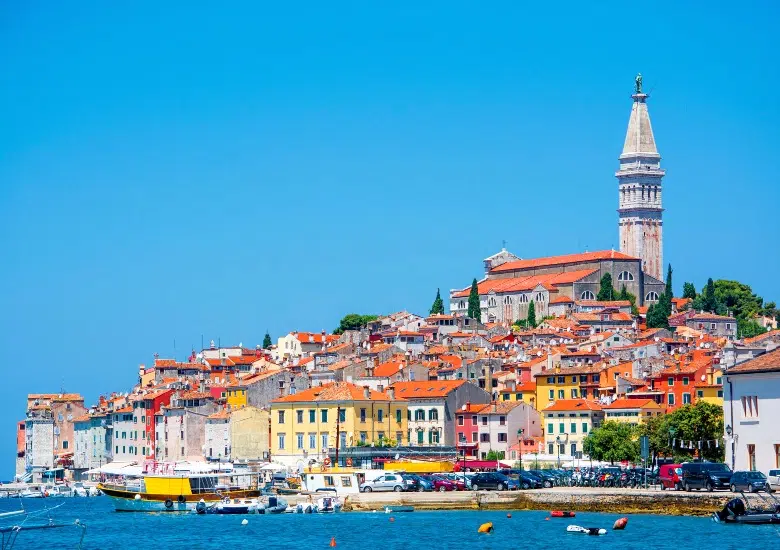
Nestled along the west coast, Rovinj is known for its romantic Old Town. Visitors enjoy strolling the cobbled streets of the impeccably preserved historic center, lined with homes painted in Venetian reds and Habsburg pastels. Looking as if it rises out of the sea, its roots date back to as early as the 7th century BC while the medieval architecture is dominated by Renaissance and Baroque styles. The Baroque-style Church of St. Euphemia with a nearly 200-foot-high bell tower is the most iconic landmark. By climbing the steps of the bell tower, you’ll enjoy a panoramic view over Rovinj and the endless blue of the sea. Learn more about the town at the Rovinj Heritage Museum with exhibits showcasing regional history and art.
Pula
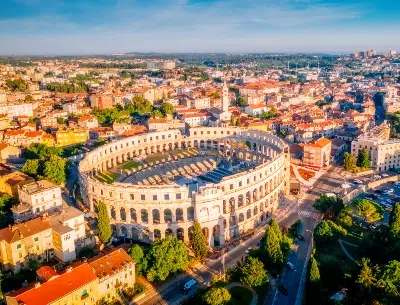
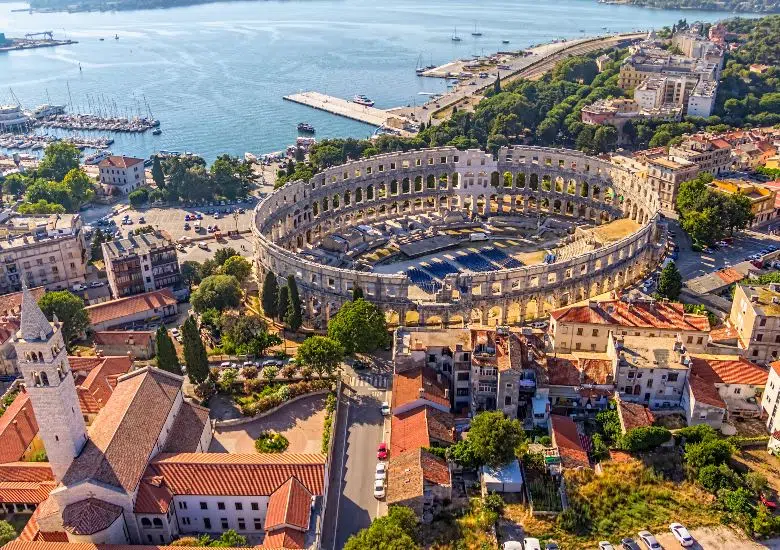
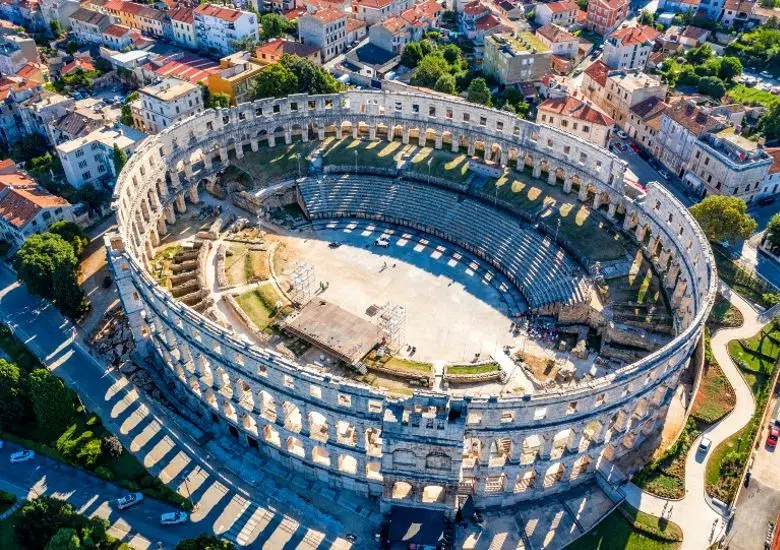
Pula is celebrated for its rich history and ancient Roman ruins such as its Roman amphitheater that’s remarkably well-preserved, dating back to the 1st century AD. The only one of its kind that survives today with four side towers and all three Roman architectural styles, it once hosted gladiator battles but today it serves as a venue for festivals and concerts. The Roman Forum, built during the 1st century BC, is now a bustling piazza, while Hercules Gate, dating to the same period, is the oldest still standing Roman monument. The seaside city boasts picturesque beaches ranging from sandy to pebbly, both with clear, aquamarine water for swimming and enjoy a wide range of watersports, including jet skiing, water skiing, and stand up paddle boarding.
Motovun
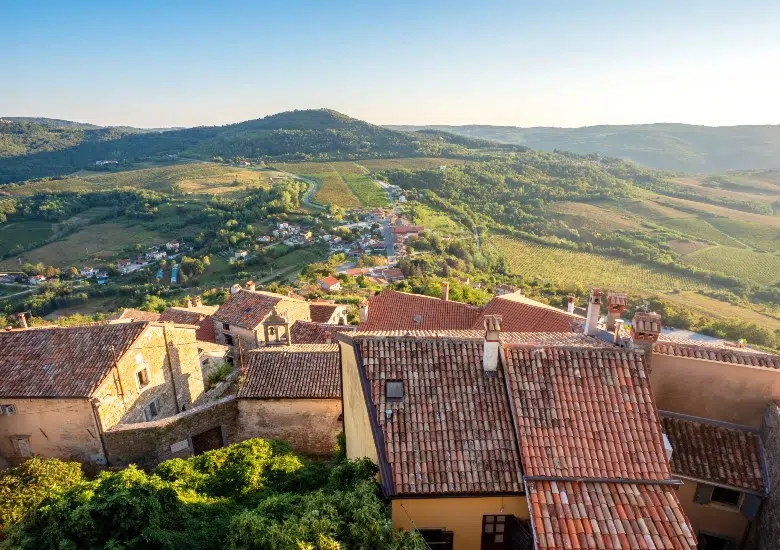
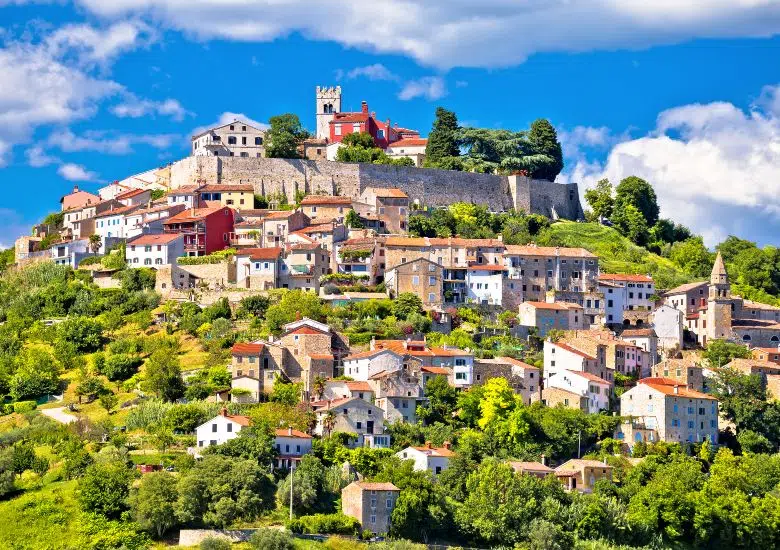
Enchanting Motovun is a walled hilltop town in the Mirna Valley with a forest at its base famous for its black and white truffles. There are many specialty shops selling truffle-related products like truffle olive oil and truffle sea salt while restaurants serve truffle dishes. Visitors can also join truffle hunting tours to experience what it’s like to find the rare delicacy alongside an expert and specially trained dogs. Numerous art galleries and studios can be explored while festivals and cultural events are often hosted providing a unique opportunity to be immersed in local culture. The Teran and Truffle Festival combines the Teran wine variety with Istria’s underground treasure in October, a time when autumn enhances the beauty of the region.
Porec
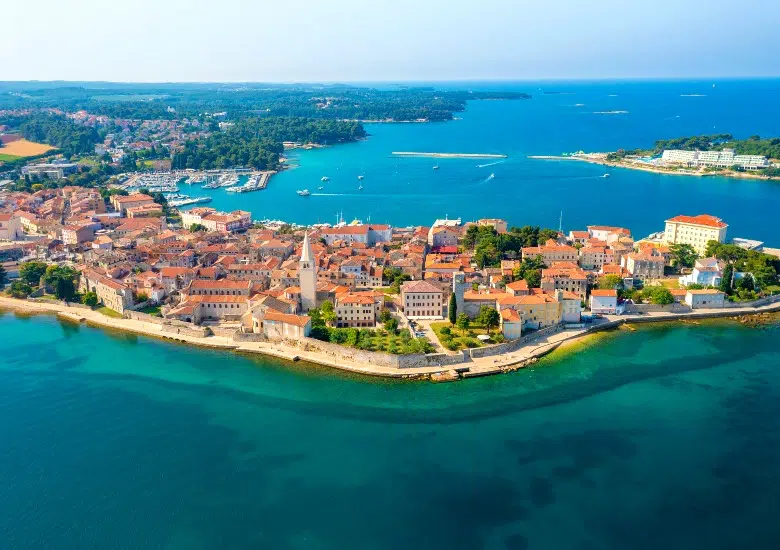
Located north of Rovinj along the west coast, Porec is tucked around a harbor and also has a fascinating history as a former Roman town dating back nearly two thousand years. Its historic center is home to the Episcopal Complex of the Euphrasian Basilica. Dating to the 4th century, it’s the most complete complex of its kind that survives today. Porec’s beaches are the biggest draw for visitors, however. It’s possible to take a banana boat ride, go wakeboarding, rent jet skis, swim, or just float around on an inflatable. You’ll find many options like Blue Flag Laguna Bellevue with lifeguards and easy points of entry into the clear blue sea. Deck chairs, umbrellas, showers, bars, cafes, and restaurants are all available.
Brijuni National Park
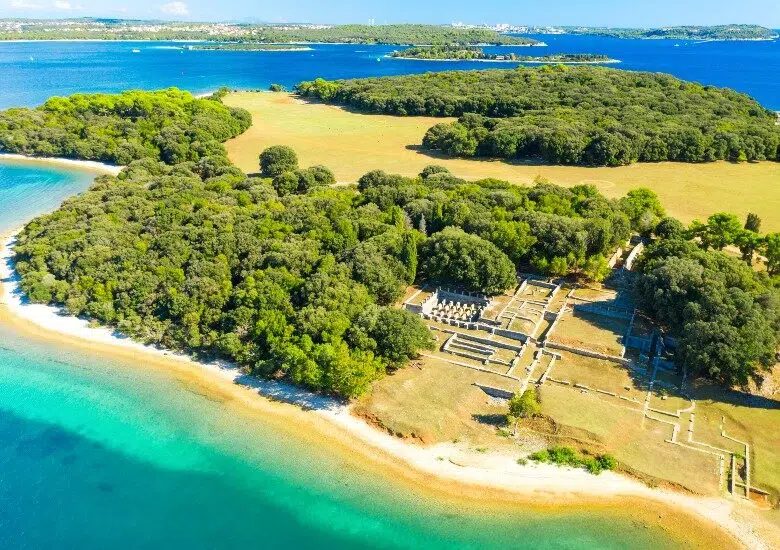
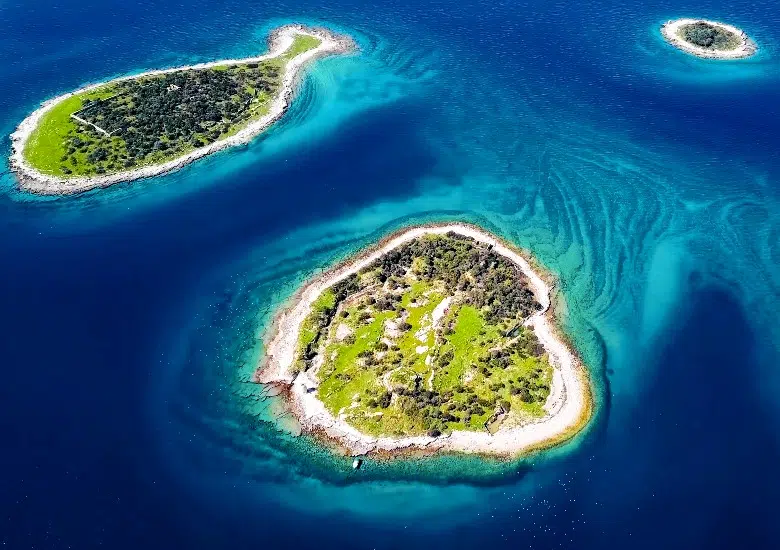
Made up of 14 islands off the Istrian coast north of Pula, Brijuni National Park offers a wide range of outdoor adventures that can be enjoyed among spectacular scenery. It’s also home to abundant flora and fauna, including some 150 different bird species from gray herons to cormorants, and owls. Veli Brijuni is the largest and only island open to visitors, but it offers numerous attractions, including Roman ruins, a safari park with elephants, zebras, bison, and ostriches, and a Mediterranean garden with 169 different autochthonous and exotic plant species. You’ll also find scenic walking and biking trails and beaches like Sveti Jerolim, popular for sunbathing and swimming. An underwater trail on the island’s southern side reveals a unique and beautiful marine world.
Bale
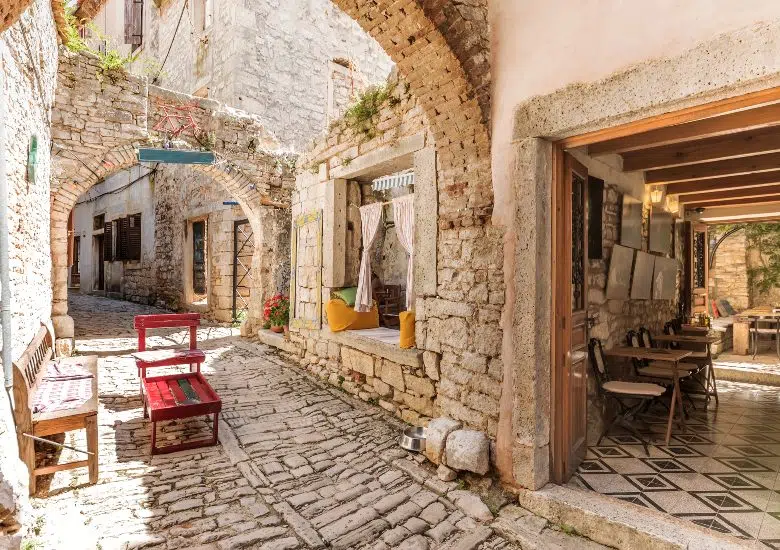
Bale is often called one of the best-kept secrets in Croatia. This historic medieval stone town was built on a hill surrounded by olive groves and vineyards only a few miles from Istria’s west coast. Few tourists make it here so you’re unlikely to encounter big crowds while the residents tend to be warm and friendly, happy to give visitors advice. It also has a bohemian, artsy vibe with lots of character, making it enjoyable to wander the medieval streets with their 14th- and 15th-century homes positioned, in a circle around the hill. Restaurants and taverns all have terraces or courtyard gardens for outdoor dining, with meals typically featuring locally grown ingredients that can be paired with Istrian wines.
Groznjan
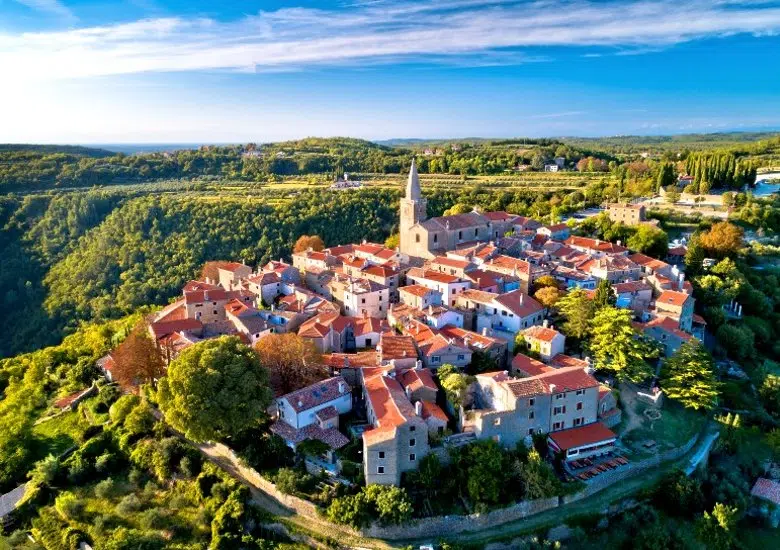
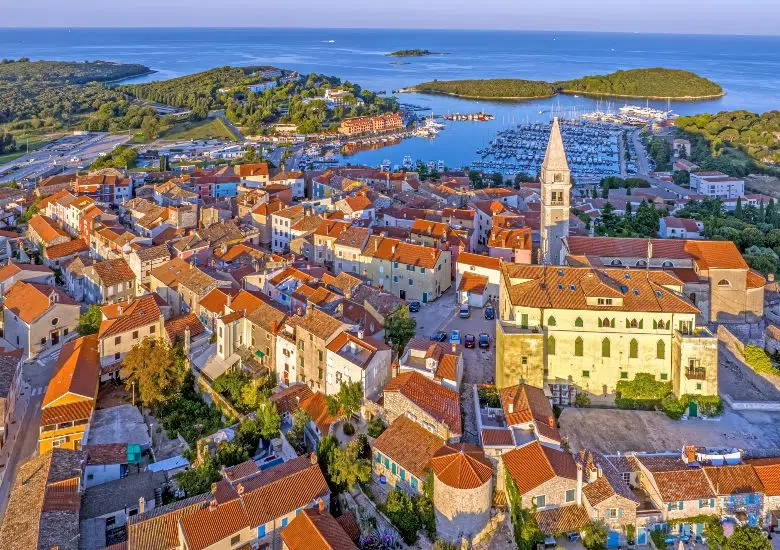
The views from Groznjan are worth the visit alone from its hilltop vantage point. It looks out over the lush Mirna Valley and out to the sea. Its charming ancient streets are lined with centuries-old buildings housing art studios, galleries, and ceramic ateliers. Highlights include the 18th-century Baroque-style Church of St. Vitus, the 13th-century fortress, and the 16th-century town loggia, now home to Fonticus Gallery. There are independent specialty shops that sell locally produced items such as truffles, truffle-based products, and olive oil while traditional konobas typically have menus featuring multiple truffle dishes along with Istrian wine. Several music festivals are hosted throughout the year, showcasing a wide range of music genres attracting musicians and music lovers from across the globe.
Vrsar
The small village of Vrsar is sandwiched between Porec and Rovinj along the coast. It offers the usual beach activities with brilliant blue water for swimming and a variety of watersports. Dolphin-watching tours, especially at sunset, are one of the top things to do. Excursions typically take in multiple sights, including picturesque islands while heading toward an area where the dolphins like to hang out. It has a pretty harbor with waterfront eateries and an Old Town that’s enticing to stroll. The narrow streets and alleyways are lined with colorful homes and charming cafes. Romance-seeking couples often come to walk hand-in-hand while following in the steps of Giacomo Casanova, the famous writer, adventurer, and master of seduction who often visited in the 18th century.
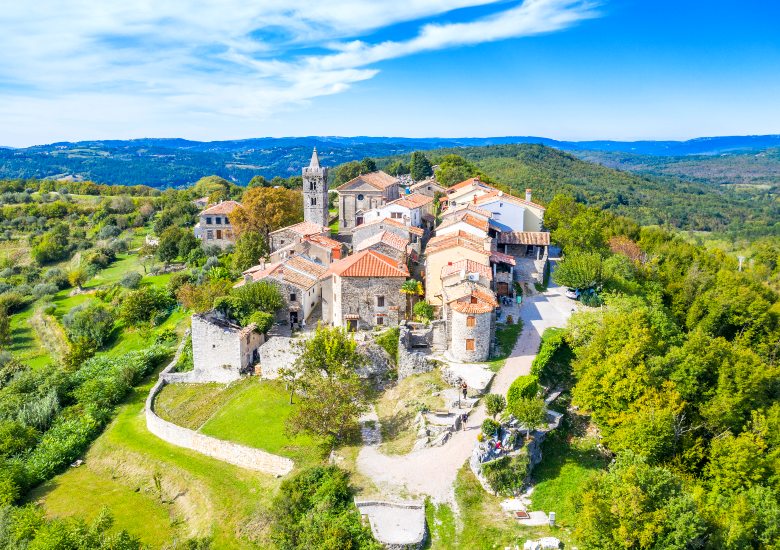
Hum
Hum is said to be the world’s smallest town. Technically, it’s a settlement considered part of the town of Buzet, with a population of around 20 inhabitants. It is truly tiny although its medieval townscape is incredibly charming. Stroll the historic stone streets and alleyways with historic homes and churches like the Baroque-style Assumption of the Virgin Mary, you’ll feel as if you’ve gone back in time. It includes an 11th-century town gate where visitors are greeted with a Glagolitic inscription that welcomes them but warns against bad intentions. You’ll find a konoba with regional delicacies, including truffle-based items, wines, brandies, and a famous mistletoe schnapps called Biska.
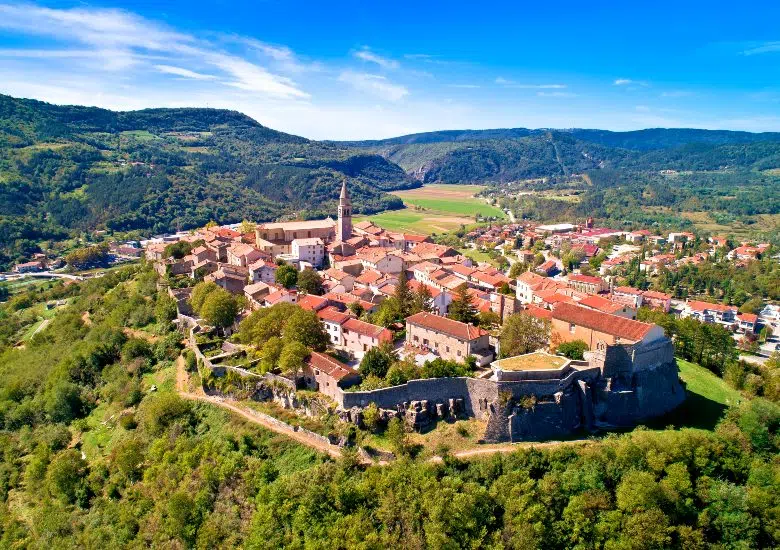
Buzet
When visiting Hum, it only makes sense to explore Buzet, and vice versa, as they’re only about a 15-minute drive apart. It offers a relaxed atmosphere while surrounded by the picturesque countryside Istria is known for, like rolling hills covered with vineyards and olive trees. There’s evidence of settlement since prehistoric times, but the town dates to the 12th century when it was reestablished – its basic structure still survives. The old town is a fortified hillfort with the remains of the walls, churches, palaces, and squares still preserved. Buzet is also renowned for its truffles. It hosts a truffle festival annually in early November where visitors can sample and buy all sorts of truffle products and other homemade Istrian items.
Top Things to do in Istria
Go Truffle Hunting
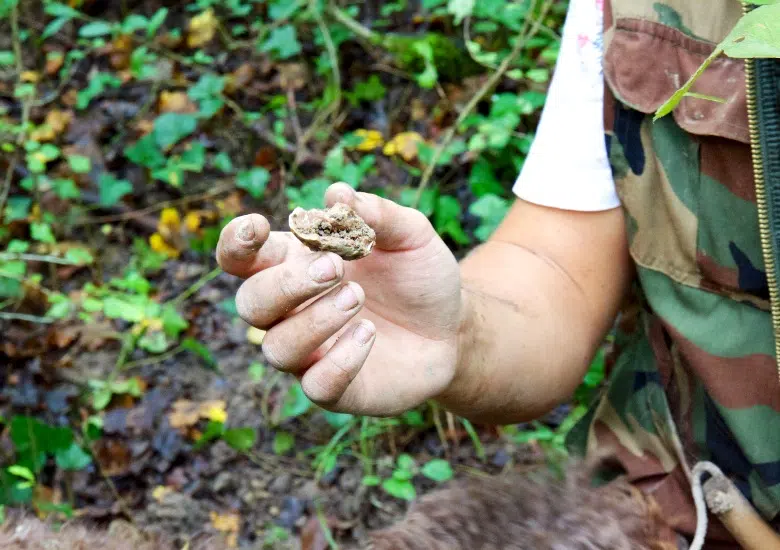
Istria is renowned for its truffles, a rare delicacy and luxury cousin of the mushroom, which can be found in the peninsula’s dense forests. You can’t visit without trying them, with local shops selling all sorts of truffle-based items while restaurants often feature at least a few truffle dishes like truffle pasta and truffle risotto. But you can go beyond sampling them, taking in the total experience by joining a truffle hunting excursion. Led by a truffle hunting expert and trained dogs, tours typically start with a private guide/driver who will pick you up at your accommodation to bring you to the forest to hunt for truffles in its hidden places. You’ll also get to know the dogs and how they are trained, as well as enjoy a tasting.
Embark on a Dolphin Watching Cruise
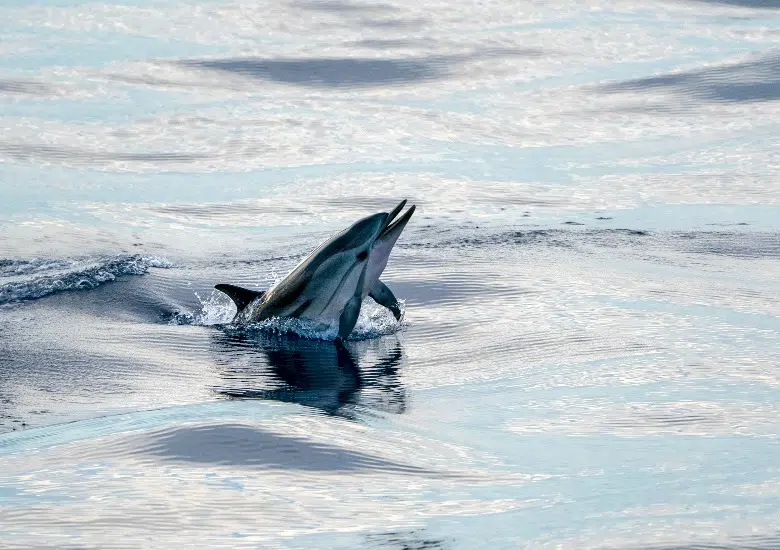
If you want to see dolphins, dolphin-watching cruises can be enjoyed in multiple destinations along the Istrian coast, with Vrsar one of the most popular, but you’ll find departures in Porec and Fazana, among others, too. The excursions typically showcase a number of sights while sailing to areas that are inhabited by the creatures. Of course, these are wild dolphins, so their whereabouts can vary based on conditions, the season, and other factors. However the local captains and guides are well-informed and know the best places to go to maximize the odds. Sunset dolphin-watching tours are available, ensuring spectacular shots for your Instagram feed either way, and many include alcoholic beverages so you can raise a glass as you watch.
Sample Local Wines
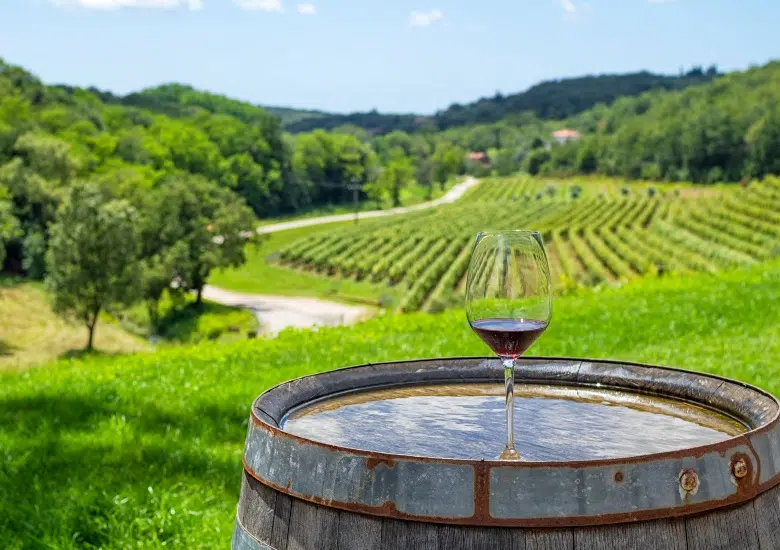
Istria is the country’s northernmost wine region, occupying most of the peninsula and stretching into southwestern Slovenia. It’s also one of the oldest wine regions in Croatia, with a winemaking tradition that dates back to early Greek settlers in ancient times. One of the factors that makes it so scenic here is its lush, vineyard-covered hills where grapes are grown to produce everything from rich reds to fruity, dry whites that use light-skinned Malvasia grapes. You’ll find roughly 250 wineries here, most of which are family-owned, providing the opportunity for some outstanding tasting and touring. With the more intimate atmosphere, you can often chat with the winemaker about their history and learn more about how the wines are produced.
Walk a Waterfall Trail in Ucka Nature Park
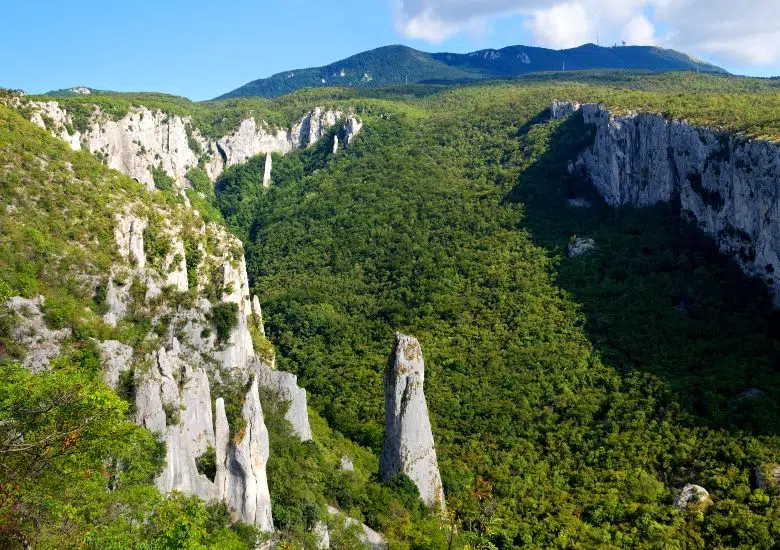
Učka Nature Park, as the name suggests, is a nature lover’s paradise, ideal for taking part in outdoor activities while surrounded by spectacular scenery. Covering 62 miles, it’s not only home to dramatic mountain peaks like Vojak, rising nearly 4,600 feet for an awe-inspiring view over Istria and beyond, but waterfalls. Slap translates to waterfall, and the Slap walking trail starting from Lovranska Draga, a picturesque village on the east side of the park, will bring you through a beautiful, lush valley. The short route runs through a forest with pine and chestnut trees, detouring to the waterfall. For something longer, take the trail from Medveja instead which travels a total of 3.6 miles out and back.
Discover Roman Ruins
Roman ruins can be found throughout the Istria Peninsula but the most renowned is Pula Arena in the seaside city of Pula. This Roman amphitheater built in the 1st century AD, is a symbol of the city and one of the finest examples of how the Romans left their mark on the region. Pula’s bustling piazza is the 1st century BC Roman Forum while Hercules Gate is the oldest Roman monument still standing today, also dating to the 1st century BC. Brijuni National Park is filled with Roman remains, including Istria’s largest ancient complex on Veli Briju, with temples and villas. Porec is the ancient Roman capital has retained its typical Roman street layout, and hosts the Temple of Neptune.
Go Sea Kayaking
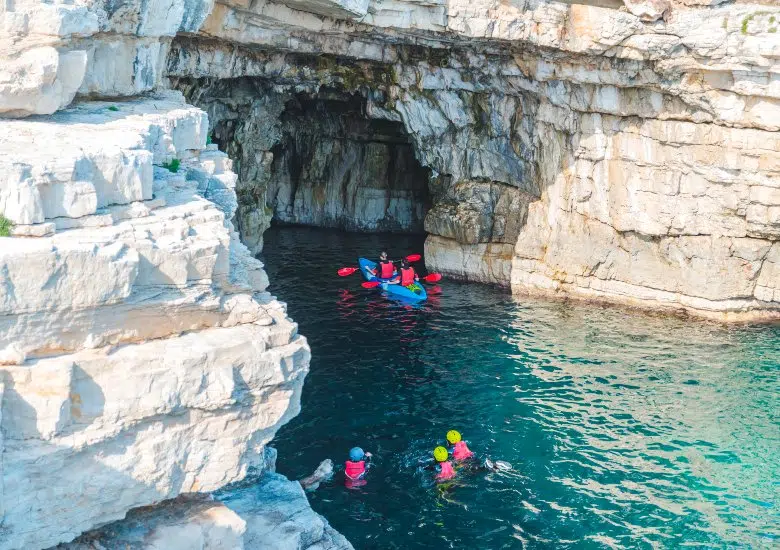
Sea kayaking is another one of Istria’s the many possible outdoor activities. There are guided excursions in and around Pula, including tours that explore the bay and Fort Punta Christo. It’s also possible to discover the beauty at Cape Kamenjak by kayak, a protected natural park bursting with spectacular nature, beaches, cliffs, and sea caves. From the charming fishing village of Vrsar, you can paddle south along the coast to the Lim fjord where you’ll be surrounded by steep cliffs and you can even discover the “Pirate Cave.” The perfect stop for a break, it can be explored on foot. In a kayak, you can also take in the historical landmarks and buildings in beautiful Rovinj from the perspective of the water.

Embark on a Snorkeling Tour
Snorkeling can be enjoyed in many places throughout Istria with its underwater paradise. That includes popular spots like Pula and Rovinj, lesser-known Marcana and Liznjan, and Brijuni National Park. The park is ideal for a snorkeling tour with one of the top attractions an underwater snorkeling trail. Guided excursions are available to explore the rich ecosystem with abundant marine life, including all sorts of colorful fish, unique rock formations, and even Roman ruins on an underwater archaeological tour. Just a couple of miles from Pula, Cape Kamenjak is another one of the top spots for snorkeling with remarkably clear water, corals, sea caves, and marine life like moray eels, octopus, squid, cuttlefish, gilthead, scorpion fish, sea cucumbers, starfish, and more.
Explore Istria’s Caves
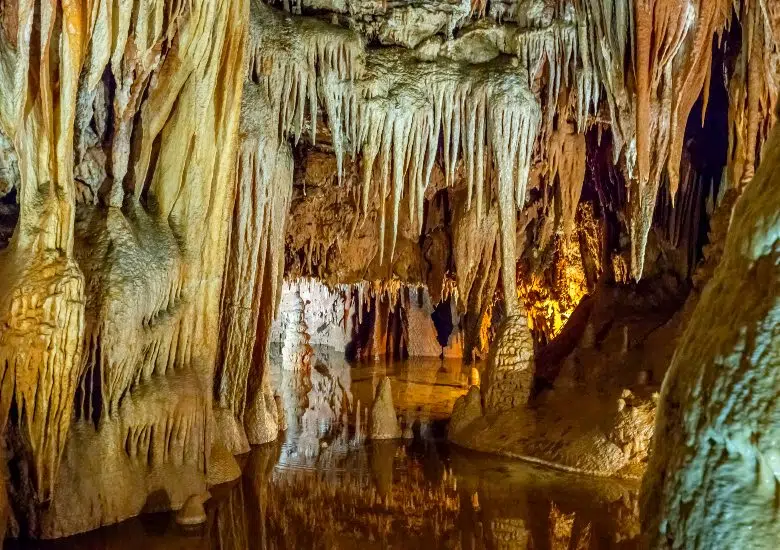
There are hundreds of caves throughout Istria, including Učka Nature Park if you want to explore some after a waterfall hike, but Baredine Cave is the most famous. It’s filled with stalagmites, stalactites, and even underground lakes that can be seen on a guided tour. There are other attractions here, including the chance to become a speleologist, a cave climbing center, and a museum. Pazin Cave below Pazin Castle, a medieval fortification built on rock, offers unique caving adventures that include riding a zipline. Mramornica Cave is one of the largest in Istria. Located near Brtonigla, it features various colored flowstones and massive stalagmites up to 43 feet high that can be seen on a 30-minute guided tour.
Go Cycling on the Parenzana Trail
A roughly 80-mile cycling route running between Porec to Muggia in Italy, the Parenzana Trail follows an old narrow-gauge railway track that operated from 1902 through 1935. It connected 33 places in Istria and today it traverses sections of both Italy and Slovenia, with about 49 miles in Croatia. It’s a great way to explore the landscapes of Istria while tracing some of its history, rolling through railway tunnels, across century-old viaducts, passing bucolic countryside with rolling hills, olive groves, and vineyards, and through lush forest. It’s a pedaler’s paradise, visiting ancient hilltop towns like Motovun and Groznjan as well as cities along the coast. Tackling the entire route is a five-day adventure with some rough sections, requiring a mountain bike.
Talk to our Croatia Cruise Experts Today
Receive a detailed quote within 24 hours
You may be interested in

Istria or Dalmatia?
If you're trying to decide whether you should visit Dalmatia or Istria, that's a tough call to make. Istria is often compared to Italy's Tuscany…
A Guide to Croatia’s Regions
There are five distinct regions in Croatia, each offering something unique of its own although all boast picturesque scenery, charming villages, impressive cities, and exceptional…
Best Time to Visit Croatia
Travel to Croatia has become increasingly popular, landing on many bucket-lists with images featuring everything from Plitvice Lakes National Park to the walled Old City…